- Scams
- Mail & Email Scams
Fake Job Offers
Fake Job Offers
Last updated
You get a job offer by text message, WhatsApp, email or through an ad. The job seems easy and well paid, for example liking videos, writing reviews or working from home. Soon you're asked to pay for training or equipment, deposit money to "unlock" your pay, or hand over your personal identity number and bank details. Sometimes you're asked to receive money and pass it on, which makes you a so-called money mule.
Warning signs
You're contacted about a job you haven't applied for.
The pay is high for very simple tasks.
You have to pay something before you can start or get your pay.
You're asked to let money pass through your account.
Examples of Fake Job Offers
Fake job offer
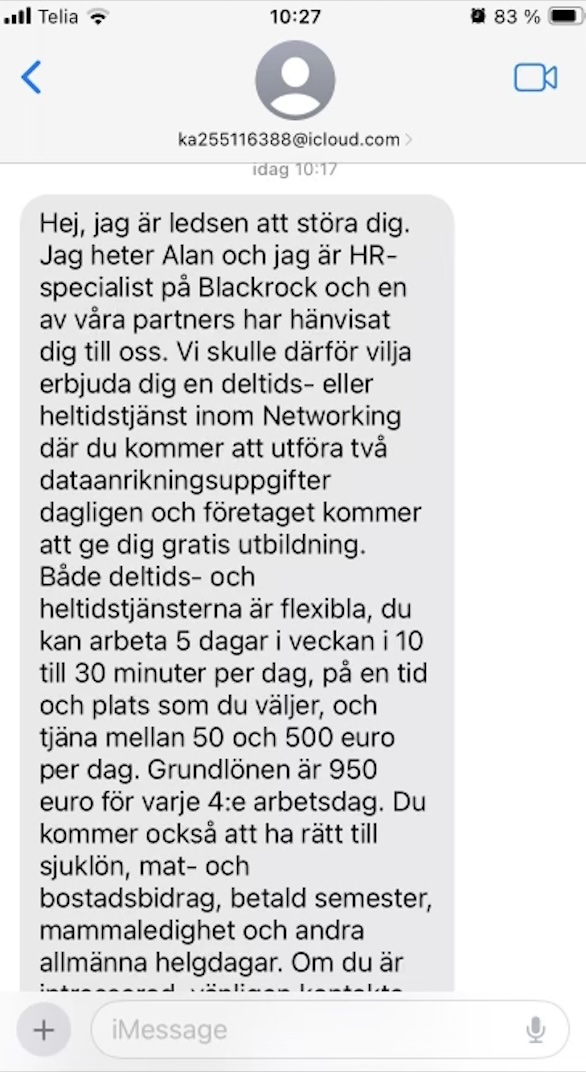
This is an example of a fake job offer, where the scammer sends out an ad for a lucrative role. In this case they claim to be from the company BlackRock, and say someone recommended you for this kind of role, which asks very little of you but pays well. Common sense often tells you that something that sounds too good to be true usually is. But in this case you can also notice that the message doesn't come as an email from someone with a BlackRock address, but as a text from an iCloud address that doesn't look professional at all.
How do you avoid this?
- Never pay to get a job.
- Never let anyone else use your account, your Swish or your BankID. You could be suspected of a crime yourself.
- Look up the company yourself and contact it through its official website.
Has this happened to you?
- Stop paying and don't reply to any more messages.
- Have you paid, or has money passed through your account? Contact your bank right away.
- Report it to the police at polisen.se or call 114 14.
- job offer
- fake jobs
- work from home
- money mule